
A Practical Guide to Contract Renewal Management
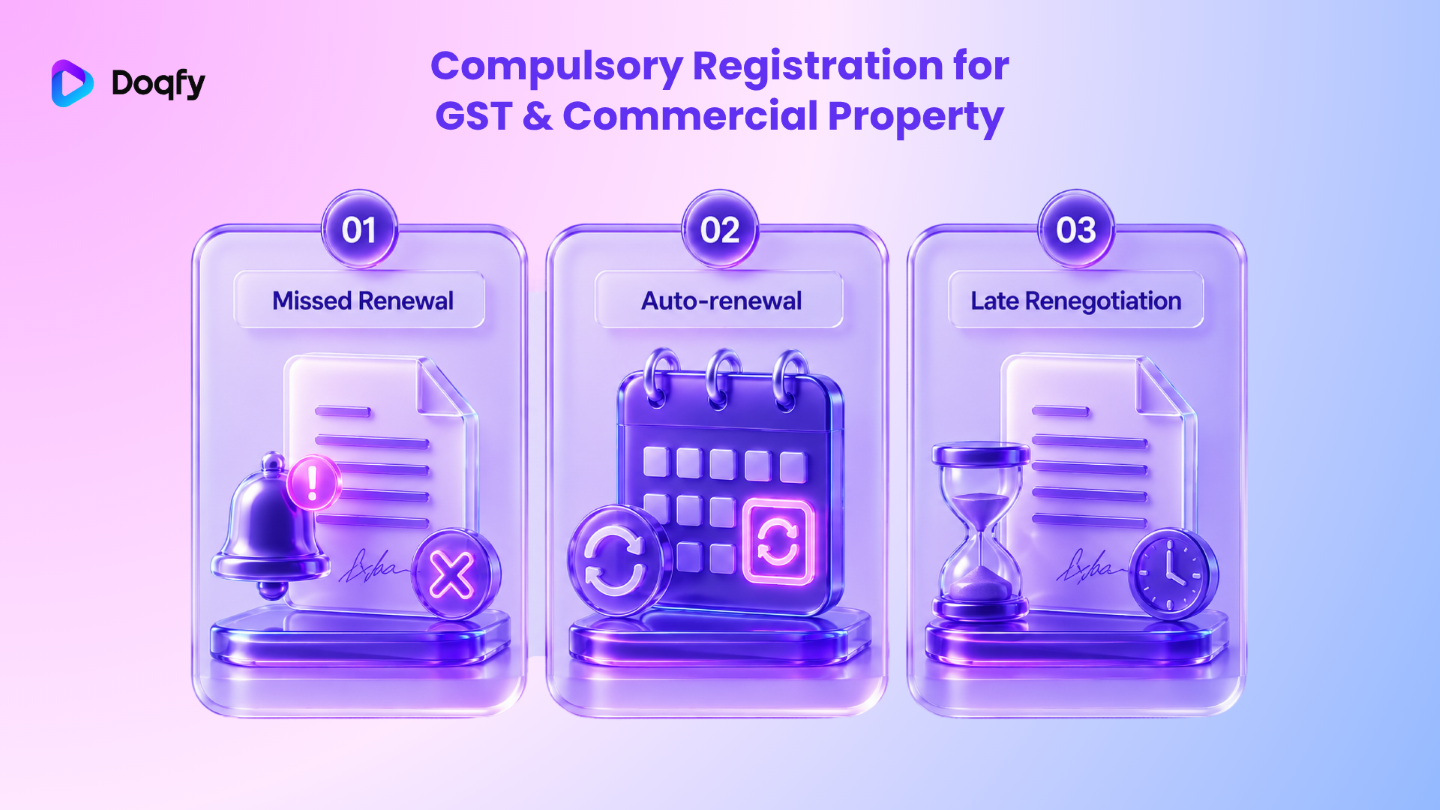
Contract renewal failures fall into three types: missed renewals, auto-renewals on stale terms, and late renegotiations. Structured workflows with encoded obligations, automated alerts, and version-controlled records prevent all three.

Renewals Are the Most Neglected Stage of the Contract Lifecycle
Most contract management attention goes to what happens before signing: drafting, review, negotiation, approval. Once the agreement is executed, it tends to disappear into a shared drive or email folder and stay there until something forces it back into view.
That forcing event is usually a problem.
A vendor invoicing at a rate that was supposed to have been renegotiated six months ago. A customer contract that auto-renewed for another year before the commercial team had a chance to reprice. A key supplier agreement that technically expired three weeks ago, meaning the relationship is currently operating with no enforceable terms at all.
These are not unusual scenarios. They are the normal output of treating renewals as a calendar task rather than a managed workflow. And the commercial cost accumulates quietly until it becomes visible on a spreadsheet or in a dispute.
The Three Renewal Failure Modes
Contract renewal failures are not random. They cluster into three patterns, each with a distinct cause and a distinct cost.
1. Missed renewal: Contract expires without action
- The team does not know the contract is expiring because the date is stored in the signed PDF, not in any system that surfaces it proactively.
- No alert fires. No workflow starts. The contract lapses.
- The relationship continues on no legal footing, which means no enforceable terms, no defined liability, and no agreed process for resolution if something goes wrong.
- For vendor contracts, this creates a procurement risk. For customer agreements, it creates a revenue recognition risk. For both, it creates a legal exposure that is only visible when it needs to be relied upon.
2. Auto-renewal: Contract renews on stale terms
- The agreement contains an auto-renewal clause. No one reviewed it ahead of the renewal window.
- The contract rolls over at last year's pricing, last year's SLA, last year's scope; none of which reflects the current commercial reality.
- For businesses with large vendor portfolios, even a modest percentage of auto-renewals on stale terms represents a meaningful cost drift that is very difficult to reverse mid-term.
- Auto-renewal clauses are common in software licenses, facility management contracts, and service agreements. In the absence of a system that surfaces them ahead of the renewal window, they operate entirely in the vendor's favour.
3. Late renegotiation: Renewal happens but leverage is gone
- The team knows the contract is expiring, but the alert comes too late. Two weeks before expiry rather than three months.
- At two weeks, the counterparty knows the team needs a quick resolution. The leverage that existed at three months is largely gone.
- Most renewal negotiations are won or lost by when they start, not by what is said in the room.
What Structured Renewal Management Looks Like
The difference between a renewal process that protects commercial interests and one that does not is almost entirely a question of when the workflow starts and what it triggers.
1. Encode renewal obligations
- Renewal dates, notice periods, and auto-renewal windows should be captured as structured metadata at the time the contract is signed, not added manually to a spreadsheet afterwards.
- If the obligation is in the system from day one, it can be surfaced automatically. If it is in a PDF in a folder, it will only be found if someone goes looking.
2. Set alert horizons that match commercial reality
- A notice period alert that fires seven days before expiry is not useful for renegotiation. It is only useful for deciding whether to exercise the break.
- Alert horizons should be set based on how long meaningful renegotiation actually takes for each contract type. For complex vendor agreements, ninety days is a reasonable minimum. For standard service contracts, thirty to sixty days.
- Different stakeholders need different alerts: procurement needs lead time to assess alternatives; finance needs time to model pricing scenarios; legal needs time to prepare revised terms.
3. Route renewals to the right approvers automatically
- Not all renewals are equal. A contract renewing on identical terms at low value needs a different workflow from a material commercial relationship renewing with revised pricing.
- Renewal workflows should route based on contract value, deviation from prior terms, and risk classification. The same logic that governs initial approval, applied to the renewal event.
4. Maintain version-controlled records of renegotiated terms
- A renewal that changes pricing, scope, or SLA is a new agreement, not just a continuation.
- Renegotiated terms need to be captured in a version-controlled document with a clear audit trail showing what changed, when, and on whose authority.
The Renewal Visibility Problem at Scale
For organizations managing contracts at volume, the renewal challenge is not finding any individual expiring agreement. It is having portfolio-level visibility into what is expiring when, across all contract types, all counterparties, and all business units simultaneously.
Without this visibility:
- Finance cannot forecast accurately, because renewal outcomes (price changes, term extensions, exits) are uncertain until they happen.
- Procurement cannot plan vendor relationships strategically, because the renewal calendar is not visible far enough in advance.
- Legal cannot manage workload, because renewal surges are invisible until they arrive.
A centralized contract repository with structured metadata and renewal tracking converts this uncertainty into a manageable workflow. The renewal calendar becomes visible. Alerts fire early enough to act. Approvals route automatically. And every renewal, whether it results in continuation, renegotiation, or exit, leaves a clean record.
India-Specific Context
Notice periods and their legal effect
Many Indian commercial contracts (particularly vendor agreements, commercial leases, and service contracts) contain notice period provisions that determine whether a party can exit at renewal. Failing to serve notice within the specified window can lock a party into another full term. These provisions are enforceable, and they are frequently missed when renewal tracking is manual.
Stamp duty on renewed agreements
Where a renewed agreement constitutes a fresh instrument under the Indian Stamp Act, 1899, particularly for commercial leases and certain service agreements, stamp duty obligations apply at the time of renewal execution. Digital renewal workflows that integrate e-stamping ensure these obligations are met without adding a separate process step.
GST implications of revised pricing
Renewal renegotiations that change the consideration in a service agreement have GST implications that need to be reflected in updated documentation. A renewal process that produces version-controlled records of term changes makes the paper trail for GST purposes clean and auditable.
Conclusion
Contract renewals are not a calendar management problem. They are a commercial risk that is entirely preventable with the right workflow infrastructure.
The three failure modes all share a common cause: renewal obligations that exist only in the executed document, rather than in a system that surfaces, routes, and records their resolution with a clean audit trail.
The practical fix is to stop treating execution as the end of the contract workflow and start treating it as the point at which a new (renewal workflow) begins.
Done consistently, this converts contract renewals from a source of quiet commercial leakage into a predictable and manageable process. Manage your entire contract lifecycle with Doqfy.